


Across centuries of human evolution and Islamic spiritual tradition, periodic abstinence from food has served as nature’s most potent mechanism for cellular rejuvenation and metabolic recalibration. In contemporary urban Bangladesh, however, where round-the-clock snacking on refined starches and sweetened teas keeps serum insulin perpetually elevated, the physiological machinery of fat oxidation and cellular self-cleansing rarely gets switched on. Implementing structured intermittent fasting restores the primordial rhythm between the fed state (anabolism) and the fasted state (catabolism and repair), directly addressing the root biochemical driver of type 2 diabetes, visceral obesity, and premature vascular aging.
Unlike crash starvation diets that slash caloric intake while keeping meal frequency high—a mistake that suppresses thyroid conversion and erodes lean muscle mass—time-restricted eating works primarily through hormonal and enzymatic signaling. Understanding the hour-by-hour cellular cascade of fasting benefits empowers you to select the right fasting window for your metabolic phenotype, break your fast with precision nutrient sequencing, and respect clinical safety boundaries so your metabolism thrives long term.
The Molecular Switch: From Postprandial Lipogenesis to Cellular Lipolysis
To grasp why time-restricted feeding succeeds where conventional calorie restriction fails, we must examine the antagonistic relationship between two master metabolic hormones: insulin and glucagon. Every time you consume carbohydrates or insulinogenic proteins, pancreatic beta cells secrete insulin into the portal circulation. Insulin binds to transmembrane receptors on hepatocytes, myocytes, and adipocytes, activating the PI3K/Akt signaling pathway and stimulating Mechanistic Target of Rapamycin Complex 1 (mTORC1). While insulin is elevated, glucose is shuttled into glycogen stores, excess acetyl-CoA is converted into triglycerides via hepatic de novo lipogenesis, and adipose tissue lipolysis is strictly inhibited.
Critically, insulin inhibits hormone-sensitive lipase (HSL) and adipose triglyceride lipase (ATGL) even at relatively modest serum concentrations. If a person eats breakfast at 8:00 AM, sips milk tea with biscuits at 11:00 AM, eats rice for lunch at 2:00 PM, snacks on singara at 5:30 PM, and eats dinner at 10:30 PM, their serum insulin remains above the lipolytic threshold for nearly nineteen hours out of every twenty-four. Stored visceral and hepatic fat remains biochemically locked inside adipocytes, while the liver never depletes its glycogen reserves.
When you consolidate nourishment into an eight-to-ten-hour circadian window and fast cleanly for fourteen to sixteen hours, baseline insulin falls dramatically while pancreatic alpha cells release glucagon. As the insulin-to-glucagon ratio inverts, hepatic glycogenolysis releases stored glycogen for the first ten to twelve hours, after which the body executes the “metabolic switch” described in landmark research published in The New England Journal of Medicine. Adipocytes release free fatty acids (FFAs) and glycerol into circulation, and hepatocyte mitochondria transport these fatty acids across the inner mitochondrial membrane via Carnitine Palmitoyltransferase 1 (CPT-1) for beta-oxidation and ketogenesis.
Autophagy, AMPK Activation, and Beta-Hydroxybutyrate Signaling
Beyond simple fat mobilization, extending the daily digestive rest window triggers profound intracellular quality-control pathways that cannot occur in the fed state. As cellular ratios of AMP-to-ATP and NAD+-to-NADH rise during fasting, two longevity sensors are activated simultaneously: AMP-activated protein kinase (AMPK) and NAD+-dependent deacetylases known as Sirtuins (specifically SIRT1 and SIRT3). Activated AMPK directly phosphorylates Raptor to suppress mTORC1 while phosphorylating Unc-51-like autophagy-activating kinase 1 (ULK1), initiating the formation of double-membraned autophagosomes.
Through macroautophagy—the cellular recycling discovery awarded the 2016 Nobel Prize in Physiology or Medicine—autophagosomes engulf misfolded proteins, glycated collagen cross-links, oxidized lipid droplets (lipophagy), and damaged, reactive-oxygen-leaking mitochondria (mitophagy). These cellular debris structures fuse with lysosomes, where acidic hydrolases cleave them into pristine amino acids and fatty acids for building new organelles. Concurrently, peroxisome proliferator-activated receptor-gamma coactivator 1-alpha (PGC-1α) is upregulated, driving mitochondrial biogenesis so existing cells generate cleaner, more efficient ATP with minimal oxidative stress.
As hepatic beta-oxidation accelerates past hour fourteen to sixteen, the liver converts excess acetyl-CoA into ketone bodies: acetoacetate and beta-hydroxybutyrate (BHB). Far from being a mere backup fuel, BHB functions as a potent epigenetic signaling metabolite. Studies indexed on PubMed Central confirm that BHB crosses the blood-brain barrier via monocarboxylate transporters, inhibits Class I Histone Deacetylases (HDACs) to upregulate oxidative stress resistance genes (FOXO3a and MT2), suppresses the NLRP3 inflammasome to lower systemic interleukin-1β and IL-18, and stimulates Brain-Derived Neurotrophic Factor (BDNF) to sharpen cognitive focus and neuroplasticity.
Hour-by-Hour Physiological Timeline of a Daily Fast
Understanding what transpires inside your organs during each phase of a fast removes anxiety around temporary hunger waves and helps you align your daily schedule with precision.
| Fasting Window | Physiological Phase | Dominant Hormonal & Enzymatic Shift | Systemic & Cellular Outcome |
|---|---|---|---|
| Hours 0 – 4 | Postprandial Absorptive Phase | Elevated insulin, GLP-1, and cholecystokinin (CCK); active mTORC1 signaling; suppressed glucagon. | Nutrient digestion and absorption; hepatic and muscular glycogen synthesis; zero fat oxidation while dietary glucose clears. |
| Hours 4 – 8 | Post-Absorptive Transition | Serum insulin declines steadily; pancreatic glucagon begins rising; Migrating Motor Complex (MMC) activates. | Peristaltic gastrointestinal “housekeeping waves” sweep residual bacteria and debris from small intestine into colon, reducing SIBO and bloating. |
| Hours 8 – 12 | Hepatic Glycogenolysis | Glucagon activates hepatic glycogen phosphorylase; baseline insulin approaches fasting trough; ghrelin pulses briefly then subsides. | Liver glycogen reserves deplete by 60–75%; intramuscular triglyceride utilization increases; hepatic de novo lipogenesis stops completely. |
| Hours 12 – 16 | The Metabolic Switch (Lipolysis & Early Ketogenesis) | Hormone-sensitive lipase (HSL) and CPT-1 fully active; AMPK and SIRT1 rise; pulsatile Human Growth Hormone (HGH) increases. | Visceral and hepatic adipocytes release free fatty acids; blood ketones (BHB) rise to 0.3–0.6 mmol/L; lean muscle protein is spared by HGH. |
| Hours 16 – 20 | Autophagic Upregulation & Deep Fat Oxidation | Strong mTORC1 suppression; ULK1-mediated autophagosome formation; PGC-1α and brain BDNF expression peak. | Clearance of damaged organelles and misfolded proteins; NLRP3 inflammasome inhibition; heightened mental clarity and steady energy. |
| Hours 20 – 24 | Cellular Rejuvenation & Stem Cell Priming | BHB reaches 1.0–2.0 mmol/L; intestinal stem cell fatty-acid oxidation pathways activate; deep insulin receptor resensitization. | Accelerated mucosal barrier regeneration, visceral fat reduction, and systemic lowering of hs-CRP and fasting insulin. |
Comparing Time-Restricted Protocols: 12:12, 14:10, 16:8, and Sunnah Fasting
Selecting the optimal intermittent fasting architecture requires matching the duration of digestive rest to your endocrine resilience, gender physiology, and daily routine within the Five Pillars of JK Lifestyle.
- 12:12 Circadian Baseline Protocol (7:30 AM to 7:30 PM Feeding): The foundational starting point for beginners, elderly adults, and individuals recovering from adrenal fatigue. Fasting for 12 overnight hours aligns meal intake strictly with daylight, halts late-night snacking, and restores normal Migrating Motor Complex gut motility without placing any stress on the HPA axis.
- 14:10 Metabolic Balance Protocol (8:30 AM to 6:30 PM or 10:00 AM to 8:00 PM Feeding): Often the clinical “sweet spot” for premenopausal women and busy professionals. A 14-hour fast depletes sufficient hepatic glycogen to unlock daily fat oxidation and lower fasting insulin while remaining gentle enough to avoid perturbing kisspeptin neurons in the hypothalamus that regulate gonadotropin-releasing hormone (GnRH), luteinizing hormone (LH), and progesterone.
- 16:8 Early or Midday Time-Restricted Eating (10:00 AM to 6:00 PM or 12:00 PM to 8:00 PM Feeding): The gold-standard therapeutic protocol for reversing insulin resistance, metabolic syndrome, and grade 1–2 non-alcoholic fatty liver disease. By extending the daily fast to 16 hours and consuming two nutrient-dense meals with zero snacking in between, patients consistently achieve robust AMPK activation, visceral fat loss, and improved glycemic control.
- Prophetic Sunnah Monday & Thursday Fasting: Integrating twice-weekly dawn-to-sunset fasts (from Fajr to Maghrib) on Mondays and Thursdays blends spiritual devotion with periodic metabolic hormesis. When practiced with a clean, low-glycemic Sehri (eggs cooked in Organic Grass-Fed Ghee, soaked nuts, and mineral water) and broken gently at Maghrib without deep-fried piyaju or sugary syrups, Sunnah fasting delivers powerful cardiometabolic and spiritual renewal.
What Keeps a Fast Clean vs. What Breaks Autophagy and Spikes Insulin
A frequent pitfall among beginners in Bangladesh is unknowingly consuming “small” items during the fasting window that trigger cephalic-phase insulin secretion or reactivate mTORC1, abruptly halting lipolysis and autophagy.
During your fasting hours, strictly avoid sweetened or unsweetened milk tea (dudh cha), lemon tea with sugar or honey, coconut water (daab, which contains natural simple sugars and potassium best reserved for your eating window), bone broth (which contains amino acids like leucine and glutamine that stimulate mTORC1 and pause autophagy), chewing gum with artificial sweeteners, and branched-chain amino acid (BCAA) powders. Instead, keep your fast biochemically clean with pure filtered water, mineral water with a pinch of unrefined pink Himalayan salt, plain green tea, black coffee without milk or sugar, herbal infusions (cinnamon, ginger, or chamomile), and 1 tablespoon of Raw Apple Cider Vinegar with the Mother diluted in warm water 15 to 20 minutes before your first meal.
The Art of Refeeding: How to Break Your Fast for Maximum Metabolic Gain
How you terminate a fast is just as consequential as the fast itself. At the end of a 14-to-18-hour fast, your small intestinal enterocytes exhibit heightened permeability and upregulated GLUT2/SGLT1 glucose transporters, while hepatic insulin receptors are acutely sensitized. Flooding a fasted gut with refined carbohydrates—such as white rice, paratha, sweet fruits, or deep-fried seed-oil snacks—triggers an exaggerated postprandial glucose and insulin surge, rapid fluid retention, and intestinal discomfort.
Execute a three-step clinical refeeding sequence to lock in your fasting benefits:
- Step 1 (T-Minus 15 Minutes — Gastric & Enzymatic Priming): Drink 250 mL of warm water mixed with 1 tablespoon of Raw Apple Cider Vinegar with the Mother and a pinch of pink salt. The acetic acid acidifies the stomach lumen to activate pepsinogen, stimulates bile release from the gallbladder, and buffers brush-border starch-digesting enzymes.
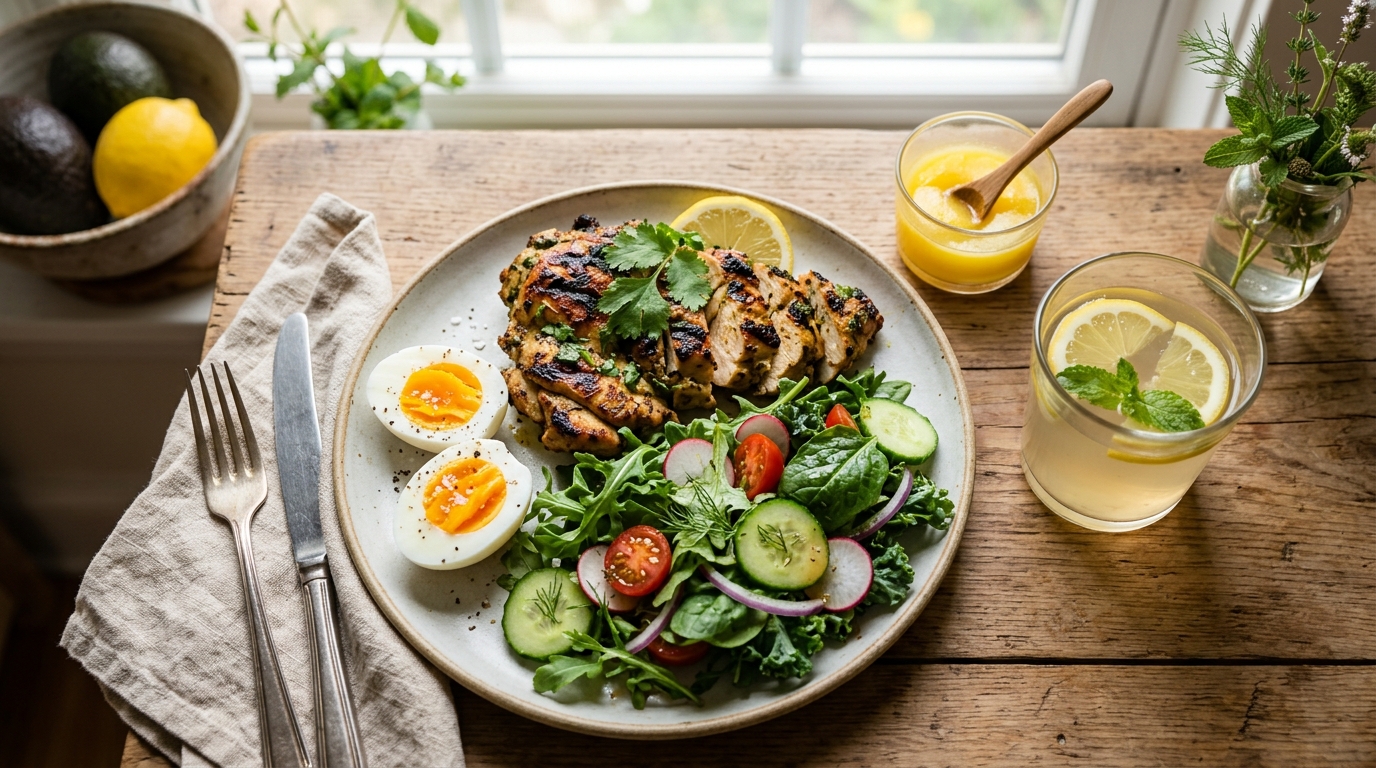
- Step 2 (Minute 0 to 10 — Mucosal Fiber & Clean Protein Primer): Begin your break-fast meal with crisp, hydrating low-glycemic vegetables (cucumber, lettuce, tomato, radish, or steamed leafy greens dressed with extra-virgin olive oil and lemon) alongside easily digestible complete protein such as two boiled or poached pasture-raised eggs or flaky steamed river fish.
- Step 3 (Main Nourishment — Healthy Fats & Whole Foods): Transition into the remainder of your meal featuring grilled country chicken or slow-cooked meat prepared in Organic Grass-Fed Ghee, fermented vegetables or probiotic curd (tok doi), and—only if your metabolic goals allow—a modest portion of complex carbohydrate eaten last. Follow the meal with a 12-to-15-minute walk to engage contraction-mediated GLUT4 glucose uptake.
Clinical Contraindications, Limits, and Female Endocrine Nuances
While periodic fasting is extraordinarily therapeutic for hyperinsulinemic adults, it is a biological stressor (hormesis) that has clear clinical limits and absolute contraindications. As highlighted in metabolic safety reviews from Harvard Health Publishing, more fasting is not always better; excessive fasting combined with sleep deprivation, overtraining, or chronic psychological stress elevates serum cortisol, suppresses deiodinase enzymes that convert inactive thyroid hormone (T4) into active triiodothyronine (T3), and increases reverse T3 (rT3).
| Population / Clinical Profile | Safety Classification | Pathophysiological Rationale | Recommended Clinical Protocol |
|---|---|---|---|
| Adults with Insulin Resistance, Prediabetes, NAFLD, or Visceral Obesity | Highly Indicated (Tier 1 Candidate) | Elevated baseline insulin and abundant hepatic/visceral fat stores provide ample endogenous substrate during fasting hours. | Progress from 12:12 to 14:10 and 16:8 over 3 weeks; pair with resistance exercise and low-glycemic whole foods. |
| Women with PCOS (Polycystic Ovary Syndrome) | Indicated with Circadian Timing | Hyperinsulinemia stimulates ovarian theca cells to overproduce androgens (testosterone); lowering insulin restores ovulation. | Early 14:10 or 16:8 (eating 8:30 AM – 4:30 PM or 9:00 AM – 7:00 PM); avoid late-night fasting schedules that raise evening cortisol. |
| Premenopausal Women in Late Luteal Phase (7 Days Pre-Menses) | Requires Cyclical Adjustment | Progesterone production demands stable glucose and low cortisol; aggressive fasting during week 4 of the cycle can trigger PMS and insomnia. | Use 14:10 or 16:8 during follicular phase (Days 1–14), then relax to a gentle 12:12 overnight window during the 7 days before menstruation. |
| Diabetics on Insulin or Sulfonylureas (Glimepiride, Gliclazide) | Requires Strict Medical Supervision | Exogenous insulin or insulin secretagogues force blood glucose down regardless of food intake, creating acute risk of severe hypoglycemia. | Never fast >12 hours without physician-guided medication deprescribing and continuous/frequent glucometer monitoring. |
| Pregnant or Exclusively Breastfeeding Mothers, Growing Children, & Underweight Individuals (BMI < 18.5) | Strictly Contraindicated | Fetal development, lactation (which carries risk of lactation ketoacidosis if severely restricted), and pediatric growth require continuous mTOR anabolism. | Focus on three nutrient-dense meals plus healthy snacks within a natural 12-hour daylight window; zero extended fasting. |
| History of Anorexia, Bulimia, or Active Binge-Purge Disordered Eating | Strictly Contraindicated | Rigid time restrictions can reactivate obsessive restriction-binge neurocircuitry and HPA-axis dysregulation. | Prioritize regular, scheduled nourishment with protein, healthy fats, and nervous-system regulation. |
Preserving Lean Muscle Mass: Training and Protein Distribution
A common concern among men and women starting intermittent fasting is whether narrowing the eating window will cause skeletal muscle catabolism. In reality, short-term fasting upregulates pulsatile Human Growth Hormone (HGH) secretion by up to 300% to 500%, which actively protects lean tissue while directing the body to oxidize adipose triglycerides. Muscle loss only occurs when individuals commit two avoidable errors: failing to consume adequate dietary protein during their feeding window and neglecting mechanical resistance training.
To safeguard and build lean muscle mass while shedding visceral fat, aim for 1.4 to 1.8 grams of complete protein per kilogram of ideal body weight distributed across your two or three meals. Because older adults experience “anabolic resistance,” each meal should provide at least 30 to 40 grams of protein (supplying the 2.5 to 3.0 grams of the essential amino acid leucine required to trigger muscle protein synthesis via mTORC1 during the fed window). Combine this nutritional density with the resistance training principles outlined in our Exercise Benefits Guide—ideally scheduling your strength session either near the end of your fast (followed within 45 minutes by your protein-rich break-fast meal) or two hours after your first meal—while maintaining daily spinal and joint mobility through mindful Namaz and calming Dhikr.
Frequently Asked Questions (FAQ)
1. Does drinking black coffee, green tea, or Raw Apple Cider Vinegar break a daily fast?
Plain filtered water, mineral water with pink salt, unsweetened green tea, and black coffee without milk, cream, or sugar contain negligible calories and do not elicit an insulin response, meaning they preserve both fat oxidation and cellular autophagy. Furthermore, taking 1 tablespoon of Raw Apple Cider Vinegar with the Mother diluted in water right before your eating window opens enhances AMPK activation and blunts the glucose excursion of your upcoming meal without disrupting your fasted metabolic state.
2. Why do I feel mild headaches or dizziness during the first week of fasting?
This temporary phenomenon—often called the “natriuresis of fasting”—occurs because falling serum insulin signals the renal proximal tubules to excrete sodium and water that were previously retained under hyperinsulinemic conditions. You can prevent headaches and orthostatic dizziness immediately by dissolving a quarter-teaspoon of unrefined pink Himalayan salt into a tall glass of water each morning and mid-day during your fasting window.
3. Will time-restricted eating slow down my thyroid or damage female hormones?
Time-restricted eating only stresses the thyroid or female reproductive axis when combined with chronic caloric starvation, high-refined-carbohydrate meals, or excessive fasting windows (such as daily 20+ hour fasts) during the late luteal phase. When women nourish themselves abundantly with bioavailable proteins, pasture-raised eggs, Organic Grass-Fed Ghee, and mineral-rich vegetables during a 14:10 or 16:8 window—and scale back to 12:12 during the week before menstruation—ovulatory function and insulin sensitivity improve remarkably.
4. Can I take my morning blood pressure or thyroid medication while fasting?
Levothyroxine (thyroid hormone replacement) is actually absorbed best on an empty stomach with plain water 30 to 60 minutes before any food or coffee, making it naturally compatible with morning fasting. Many antihypertensive medications can also be taken with water during a fast, whereas oral diabetes medications (especially sulfonylureas) and NSAID painkillers require food and medical dose adjustments; coordinate medication timing directly with your prescribing physician.
5. How long should I practice time-restricted fasting to see measurable fasting benefits in my blood work?
Most patients notice reduced abdominal bloating, steadier afternoon energy, and clearer morning cognition within 7 to 10 days as the Migrating Motor Complex and ketone signaling come online. Measurable clinical improvements in fasting serum insulin, HOMA-IR, liver enzymes (ALT/AST), and waist circumference typically manifest within 4 to 6 weeks, while full HbA1c and lipid panel transformations are evaluated at the 90-day mark.
Book Your Lifestyle Consultation — Call 09678-242404.