


Every January and before every wedding or Eid season in Bangladesh, millions of people embark on punishing starvation regimens—surviving on two dry wheat rotis, boiled bottle gourd (lau), and endless cups of green tea while slashing daily intake below 800 kilocalories. Within ten days, the bathroom scale drops by three to four kilograms, creating a brief illusion of victory before relentless hunger, hair shedding, cold intolerance, and rapid rebound weight gain leave the dieter heavier than when they started. Designing a physiologically sound weight loss diet requires abandoning simplistic “calories in, calories out” arithmetic and addressing the neuroendocrine survival mechanisms that govern human adiposity.
The human body is not a passive bomb calorimeter that burns calories at a fixed rate regardless of food quality or meal timing. Instead, our hypothalamus, thyroid gland, pancreas, and skeletal muscles operate as an integrated cybernetic system evolved over millennia to defend against famine. When you subject your physiology to sudden, severe caloric deprivation without lowering insulin or preserving lean muscle tissue, your body interprets the deficit as life-threatening starvation and deploys powerful metabolic countermeasures that guarantee long-term fat regain.
The Neuroendocrine Backlash: Adaptive Thermogenesis and Thyroid Downregulation
When a person abruptly cuts daily energy intake by 50 percent or more, the body initiates a phenomenon known clinically as adaptive thermogenesis or “metabolic adaptation.” Landmark human physiology studies published in The New England Journal of Medicine demonstrate that crash dieting suppresses Resting Energy Expenditure (REE) and Non-Exercise Activity Thermogenesis (NEAT) far beyond what can be explained by the loss of body mass alone. Even years after a severe semi-starvation protocol ends, resting metabolic rate can remain suppressed by 300 to 500 kilocalories per day unless the underlying hormonal axis is rehabilitated.
The primary brake pedal of this metabolic slowdown is the hypothalamic-pituitary-thyroid (HPT) axis. Under normal nourishment, the thyroid gland secretes mostly inactive thyroxine (T4), which peripheral tissues—primarily the liver, kidneys, and skeletal muscle—convert into metabolically active triiodothyronine (T3) using Type 1 and Type 2 deiodinase enzymes (D1 and D2). Active T3 binds nuclear thyroid receptors to upregulate mitochondrial uncoupling proteins and maintain basal body temperature and lipid oxidation.
During an extreme low-calorie crash diet, falling leptin levels and rising cortisol suppress hepatic D1 and D2 enzyme activity while simultaneously upregulating Type 3 deiodinase (D3). The D3 enzyme converts T4 not into active T3, but into its mirror-image isomer, Reverse T3 (rT3). Reverse T3 is metabolically inactive, yet it binds tightly to cellular thyroid receptors and physically blocks free T3 from entering the cell—creating profound intracellular hypothyroidism even when standard serum TSH blood tests appear deceptively normal.
Leptin Collapse, Ghrelin Hypersecretion, and Hypothalamic Hunger Loops

Simultaneously, extreme caloric restriction triggers a violent tug-of-war inside the arcuate nucleus of the hypothalamus between two opposing populations of neurons: appetite-suppressing pro-opiomelanocortin (POMC) neurons and appetite-stimulating neuropeptide Y / agouti-related peptide (NPY/AgRP) neurons. Under healthy physiological conditions, white adipose tissue secretes the hormone leptin in proportion to fat mass, signaling POMC neurons that energy reserves are sufficient and keeping hunger quiet.
Within just seventy-two hours of crash dieting, serum leptin levels plunge by 40 to 60 percent—long before any meaningful reduction in visceral fat has occurred. The hypothalamus perceives this precipitous drop in leptin as an acute famine emergency, silencing POMC neurons and strongly activating NPY and AgRP expression. This neurochemical shift generates obsessive food preoccupation, slows sympathetic nervous system tone, and unconsciously reduces spontaneous physical movement (NEAT).
At the same time, P/D1 cells in the gastric fundus dramatically increase their pulsatile secretion of acylated ghrelin, the primary orexigenic (hunger-inducing) hormone. Elevated ghrelin not only drives ravenous cravings for hyper-palatable, starch-heavy foods like biriyani, paratha, and sweets, but also acts directly on adipocytes to inhibit lipolysis and promote lipogenesis once the person inevitably breaks their restrictive regimen. Willpower can never permanently defeat a hypothalamus that believes it is starving to death.
Medical Complications: Sarcopenia, Visceral Rebound, and Gallstones
Beyond hormonal suppression, one of the most dangerous fast weight loss risks is the rapid catabolism of metabolically active skeletal muscle mass—a condition that leads to sarcopenic obesity. When someone follows a low-calorie, low-protein, low-fat crash diet while chronic stress keeps cortisol elevated, the adrenal cortex floods the bloodstream with glucocorticoids. Cortisol triggers proteolysis (protein breakdown) in the quadriceps, glutes, and back muscles so the liver can convert muscle-derived alanine and glutamine into glucose via gluconeogenesis.
For every kilogram of skeletal muscle lost during a crash diet, daily resting caloric expenditure drops further, and the body loses its primary reservoir for postprandial insulin-mediated glucose disposal. When the individual eventually resumes normal eating, their depleted muscle mass can no longer clear carbohydrate loads efficiently, causing severe post-meal hyperinsulinemia. Because insulin and elevated lipoprotein lipase (LPL) preferentially shuttle excess energy into visceral and subcutaneous fat stores while muscle protein synthesis lags behind, the person regains 100 percent of the lost weight as pure adipose tissue—ending up with a higher body fat percentage at the exact same body weight.
Another frequently overlooked clinical consequence of extreme low-fat starvation diets is acute cholelithiasis (gallstone formation) and biliary sludge. As documented in clinical hepatology research indexed by the National Library of Medicine (PMC), rapid weight loss mobilizes large quantities of cholesterol from adipose tissue into hepatic bile, rendering the bile supersaturated with cholesterol. Concurrently, because the crash dieter avoids dietary fats like pure ghee, eggs, and fish, the duodenum fails to secrete cholecystokinin (CCK), leaving the gallbladder stagnant and uncontracted for weeks until cholesterol monohydrate crystals precipitate into painful gallstones requiring surgical cholecystectomy.
| Physiological Parameter | Extreme Crash / Starvation Diet (<800–1,000 kcal Low-Fat) | Insulin-Smart Hormonal Satiety Protocol |
|---|---|---|
| Thyroid Conversion (T4 to T3/rT3) | Suppresses D1/D2 deiodinases; spikes Reverse T3 (rT3), dropping resting metabolic rate by 20–30%. | Maintains active free T3 production and mitochondrial uncoupling via adequate micronutrients and fat fuel. |
| Skeletal Muscle & Lean Mass | Up to 35–40% of weight lost comes from skeletal muscle and water due to cortisol-driven proteolysis. | Preserves and builds lean muscle via 1.6g/kg protein intake, growth hormone pulses, and resistance training. |
| Hunger & Satiety Hormones | Plunging leptin and persistently elevated ghrelin trigger relentless NPY/AgRP hypothalamic hunger cravings. | Robust PYY, GLP-1, and CCK secretion from whole proteins and healthy fats silences hunger naturally. |
| Hepatobiliary Health | High risk of biliary sludge, cholesterol gallstones, and transient transaminase elevation from rapid visceral mobilization. | Regular gallbladder emptying stimulated by grass-fed ghee and raw apple cider vinegar prevents biliary stasis. |
| 12-Month Weight Maintenance | Over 85–95% rebound rate, typically overshooting baseline visceral fat mass (sarcopenic rebound). | Sustained visceral fat loss with restored insulin sensitivity, improved HOMA-IR, and stable basal metabolic rate. |
Why Insulin Control—Not Starvation—Unlocks Stored Body Fat
To understand what works permanently, we must examine the carbohydrate-insulin model of adiposity. Inside every white adipocyte (fat cell), stored triglycerides cannot exit the cell membrane directly; they must first be hydrolyzed into free fatty acids and glycerol by an intracellular enzyme called Hormone-Sensitive Lipase (HSL). However, insulin is the absolute biochemical inhibitor of Hormone-Sensitive Lipase and the primary activator of Lipoprotein Lipase (LPL), the gatekeeper that pulls circulating fats into the fat cell.
When a person in Dhaka eats five small low-fat meals a day consisting of brown bread toast, puffed rice (muri), plain biscuits, boiled rice, and sweet fruits—even if total calories are restricted to 1,200 kcal—their serum insulin remains chronically elevated above the lipolytic threshold. Because high insulin locks Hormone-Sensitive Lipase shut, their adipose tissue physically cannot release stored fatty acids to fuel the body. Starved of accessible fat fuel and deprived of adequate food calories, the brain experiences an internal cellular energy crisis, forcing down thyroid output and catabolizing muscle tissue instead.
By contrast, when we design a whole-food weight loss diet that lowers serum insulin through low-glycemic whole foods, abundant dietary fiber, adequate bioavailable protein, and nourishing anti-inflammatory fats, Hormone-Sensitive Lipase unlocks effortlessly. Once fasting insulin drops below 6 to 8 uIU/mL, your adipocytes release thousands of kilocalories of stored endogenous fatty acids into circulation every day. Because your cells have unrestricted access to your own body fat for ATP generation, your hypothalamus never senses famine, your thyroid continues converting T4 to active T3, and your hunger vanishes.
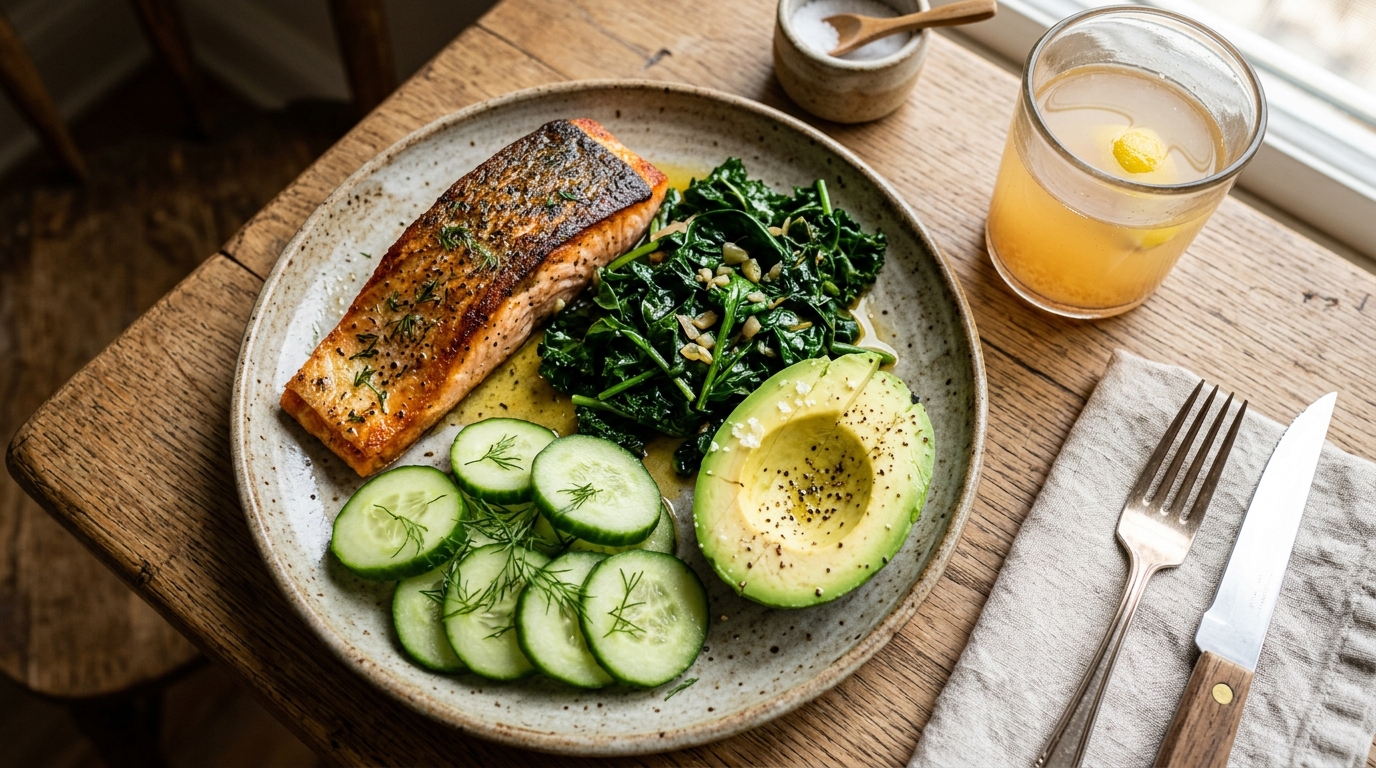
Bioactive Metabolic Tools: Grass-Fed Ghee and Raw Apple Cider Vinegar
Transitioning away from inflammatory refined seed oils (soybean, sunflower, and canola oils) and artificial low-fat diet products is essential for repairing mitochondrial fat oxidation. Industrial seed oils are overloaded with omega-6 linoleic acid, which oxidizes into 4-hydroxynonenal (4-HNE) inside mitochondrial membranes, damaging cardiolipin and impairing the electron transport chain so cells become insulin resistant. Replacing these industrial oils with Ultimate Organic Life Grass-Fed Ghee restores membrane integrity while providing clean, stable fatty acids that trigger powerful duodenal satiety signals.
When you cook local fish, eggs, or leafy vegetables in Ultimate Organic Life Grass-Fed Ghee, its rich profile of butyric acid, conjugated linoleic acid (CLA), and medium-chain triglycerides stimulates intestinal enteroendocrine I-cells and L-cells to secrete cholecystokinin (CCK), glucagon-like peptide-1 (GLP-1), and peptide YY (PYY). These gut hormones travel via the vagus nerve to the brainstem and hypothalamus to produce deep, lasting physical satiety for five to six hours while ensuring complete gallbladder contraction that eliminates one of the major fast weight loss risks—biliary sludge.
Pairing pure grass-fed ghee with Ultimate Organic Life Raw Apple Cider Vinegar with the Mother creates a synergistic metabolic shield around your daily meals. Consuming one tablespoon of raw apple cider vinegar diluted in a glass of water fifteen to twenty minutes before lunch and dinner inhibits intestinal alpha-amylase and sucrase enzymes, slowing down starch digestion in the jejunum. Furthermore, the acetic acid in raw apple cider vinegar increases skeletal muscle glucose uptake via AMPK phosphorylation, reducing the postprandial insulin area-under-the-curve by up to 34 percent and allowing you to return to fat oxidation hours sooner after eating.
7-Day Bangladeshi Hormonal Satiety Meal & Lifestyle Matrix
Rather than counting every calorie or eating bland, joyless hospital food, sustainable fat loss in Bangladesh relies on structuring two to three deeply nourishing meals within an eight-to-ten-hour daytime eating window. By integrating our five foundational pillars of holistic health with indigenous Bengali whole foods, you can heal insulin resistance while enjoying rich culinary flavors. Below is a clinical 7-day hormonal satiety protocol tailored for Bangladeshi households.
| Day | Pre-Meal Primer (10:30 AM) & Meal 1 (11:00 AM) | Afternoon Reset (3:30 PM Optional) | Early Dinner (6:30 PM – 7:00 PM) & Post-Meal Habit |
|---|---|---|---|
| Saturday | 1 tbsp Raw ACV in water; 3 pastured eggs scrambled with palong shak (spinach), onions, and green chili in 1 tbsp Grass-Fed Ghee + sliced cucumber. | 10 soaked raw almonds + green tea with a pinch of cinnamon. | 2 pieces wild Rui fish curry with pointed gourd (potol) and cauliflower rice; 20-min brisk walk + Isha Namaz. |
| Sunday | 1 tbsp Raw ACV in water; Chicken bone broth + 2 poached eggs over sautéed kolmi shak (water spinach) in Grass-Fed Ghee + half avocado. | Homemade unsweetened sour curd (tok doi) with roasted chia and flaxseeds. | Slow-cooked grass-fed beef bhuna (cooked in ghee/mustard oil) with stir-fried cabbage, papaya (pepe), and green salad. |
| Monday (Optional Sunnah Fast) | Suhoor (pre-Fajr): 3 soft-boiled eggs, lal shak in Grass-Fed Ghee, 6 walnuts, and warm water with pink salt. | Fasting window (focus on afternoon Asr Namaz and calming Dhikr). | Iftar: 1 tbsp Raw ACV water, 1 small date, grilled Koral/Bhetki fish fillet, mashed eggplant (begun bhorta in mustard oil), and mixed greens. |
| Tuesday | 1 tbsp Raw ACV in water; Omelet of 3 deshi eggs with mushrooms, tomatoes, and coriander in Grass-Fed Ghee + small bowl of thick tok doi. | 1 cup herbal tulsi-ginger tea + 15 grams pumpkin seeds. | Steamed Ilish (hilsa) in mustard paste (shorshe ilish) with okra (dherosh bhaji) and a small ½-cup serving of cooled parboiled red rice. |
| Wednesday | 1 tbsp Raw ACV in water; Shredded deshi chicken salad with olive oil, lemon, cucumber, boiled egg, and sautéed bitter gourd (korola) in Ghee. | Half cucumber with black salt and 8 macadamia or cashew nuts. | Pan-seared salmon or Katla fish steak, bottle gourd (lau chingri with prawns), and garlic-ghee spinach. |
| Thursday (Optional Sunnah Fast) | Suhoor (pre-Fajr): Pan-seared paneer or 3 eggs in Grass-Fed Ghee, sautéed green beans (borboti), chia seed pudding in coconut milk. | Fasting window (deep diaphragmatic breathing to keep cortisol low). | Iftar: 1 tbsp Raw ACV water, mutton bone broth soup, roasted deshi chicken thigh, and steamed broccoli/cauliflower in Ghee. |
| Friday | 1 tbsp Raw ACV in water; 2 eggs + small bowl of beef liver (kolija bhuna in Grass-Fed Ghee) for heme iron, retinol, and B-vitamins + fresh salad. | Black coffee or unsweetened green tea + 10 almonds. | Duck or deshi chicken curry with radish/turnip (shalgam), data shak, and ½ cup cooled resistant-starch rice; 20-min family walk. |
Resistance Training, Cortisol Mastery, and Spiritual Grounding
Nutrition is only half of the metabolic equation; you must also send an unmistakable mechanical signal to your body to retain and build skeletal muscle while shedding adipose tissue. As explained in our clinical overview of the metabolic benefits of targeted exercise, performing progressive resistance training three times per week stimulates mechanotransduction pathways in myocytes that preserve lean mass even during fat loss. Every additional kilogram of muscle acts as a metabolic sponge that absorbs circulating glucose via insulin-independent GLUT4 translocation, permanently lowering your baseline fasting insulin.
Equally critical is lowering chronic psychological stress, which epidemiology studies in The Lancet consistently link to visceral abdominal adiposity and metabolic syndrome in South Asian populations. Visceral adipocytes inside the omentum possess four times more glucocorticoid (cortisol) receptors than subcutaneous fat cells. When urban traffic stress, sleep deprivation, or anxiety over crash dieting keeps serum cortisol high, visceral fat cells actively pull triglycerides out of the blood and pack them around the liver and intestines.
Integrating daily spiritual and mind-body restoration breaks this cortisol-visceral fat cycle at its root. Performing your five daily Namaz prayers with slow, deliberate composure activates the parasympathetic nervous system through postural baroreceptor reflexes during Ruku and Sujud, while fifteen minutes of morning and evening Dhikr lowers sympathetic tone and salivary cortisol. Combining spiritual stillness with a fifteen-minute walk after dinner and seven to eight hours of restorative nocturnal sleep ensures that growth hormone pulses peak around midnight to drive overnight lipolysis.
Step-by-Step Metabolic Rehabilitation Protocol After Crash Dieting
If you have spent years cycling through extreme low-calorie diets, meal-replacement shakes, or detox cleanses, your resting metabolic rate and thyroid conversion may already be suppressed. Follow this five-step clinical rehabilitation protocol to repair your metabolism and transition into permanent fat loss.
- Prioritize Protein at Every Meal (1.6 to 2.0 g per kg of Ideal Body Weight): Begin every meal with 30 to 40 grams of complete animal or fish protein (pastured eggs, wild river/sea fish, deshi chicken, grass-fed beef, or sour curd). Dietary protein has a 25 to 30 percent Thermic Effect of Food (TEF)—meaning nearly a third of its calories are burned simply digesting and assimilating it—while providing essential amino acids to rebuild lean muscle and hepatic deiodinase enzymes.
- Eliminate Liquid Sugars, Refined Flour, and Seed Oils Immediately: Remove all sweetened dudh cha, soft drinks, packaged fruit juices, white flour (maida) parathas, biscuits, and soybean/rice bran cooking oils. Replace all cooking fats with Ultimate Organic Life Grass-Fed Ghee, extra-virgin olive oil, or cold-pressed mustard oil so your cellular membranes recover insulin sensitivity.
- Use Pre-Meal Raw Apple Cider Vinegar Priming: Drink one tablespoon of Ultimate Organic Life Raw Apple Cider Vinegar with the Mother in 250 ml of water fifteen minutes before your two main meals each day. This stabilizes post-meal blood glucose excursions, supports stomach acid protein digestion, and prevents reactive hypoglycemic cravings.
- Consolidate Eating Into a 14:10 or 16:8 Circadian Window: Stop all snacking between meals so serum insulin can return to baseline for four to five hours between lunch and dinner, and for fourteen to sixteen hours overnight. Never cut daily energy intake below your basal metabolic needs; eat until comfortably satisfied at your two main meals using whole proteins, fibrous greens, and healthy fats.
- Track Waist-to-Height Ratio and Fasting Insulin Instead of Daily Scale Weight: Stop weighing yourself obsessively every morning, as daily water fluctuations mask true body recomposition. Instead, measure your umbilical waist circumference (aiming for a waist-to-height ratio below 0.50) and check laboratory fasting insulin (target < 6 uIU/mL), HOMA-IR (target < 1.2), and triglyceride-to-HDL ratio (target < 1.5) every ninety days.
